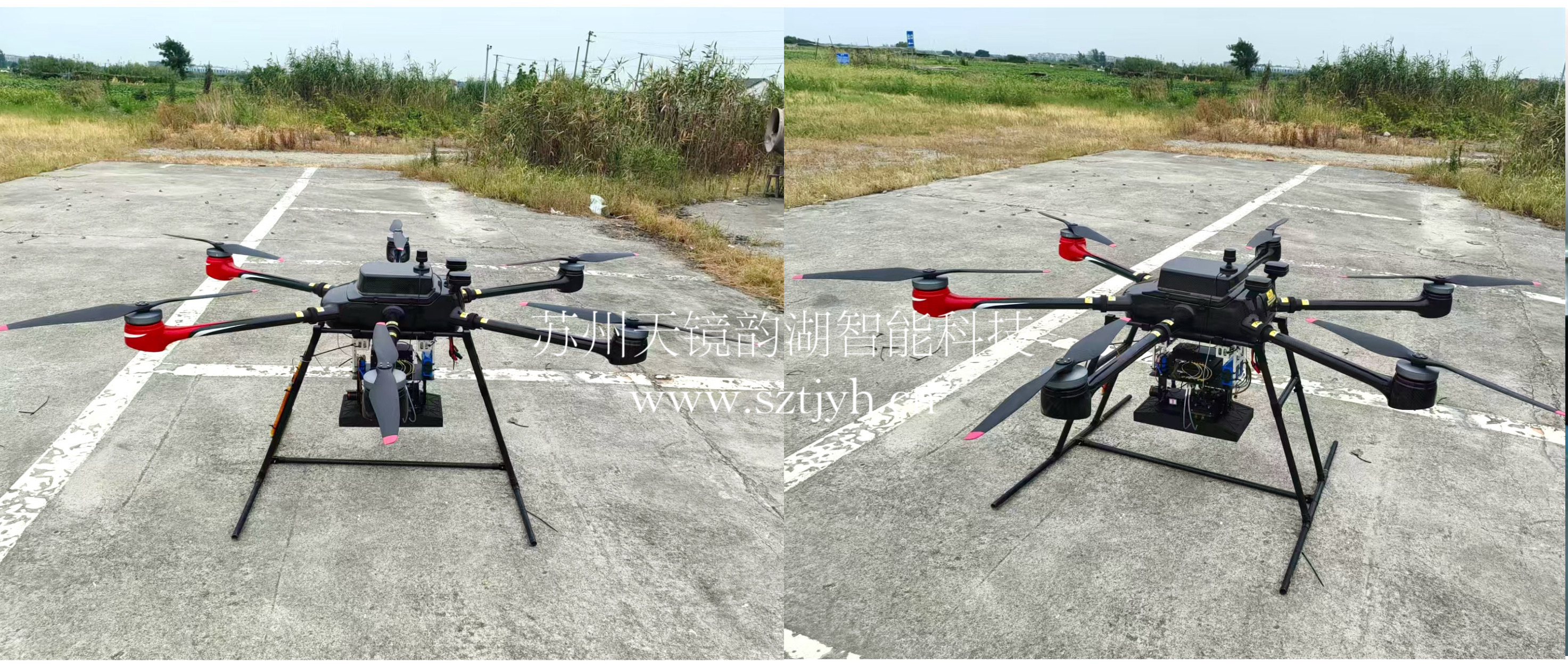

Adapting airborne SAR to multirotor platforms has never been a matter of simply mounting the payload and taking off. When a radar is installed on a multirotor platform, teams routinely run into hard-to-match vibration damping, unstable power supply, data and flight-control timing that are out of sync, and tangled wiring that makes assembly and disassembly slow, all of which directly affect the efficiency of emergency field flights and high-frequency revisit monitoring.
Picture the scene: at an outfield site, with gusting wind and limited time, a radar system that takes half an hour or more to install not only drains the crew physically but may also cost you the best flight window. Our airborne SAR system uses a quick-release structure: the entire unit connects to the aircraft through quick-lock interfaces, with no need for a pile of tools or complicated tuning. A single operator can mount and remove it, and the system is ready in 5 to 10 minutes.
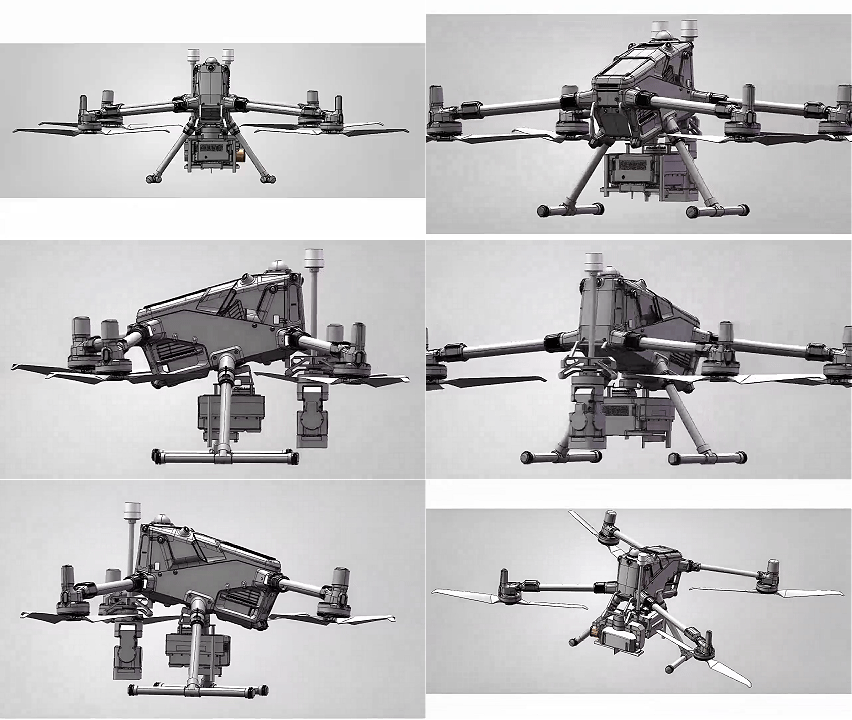
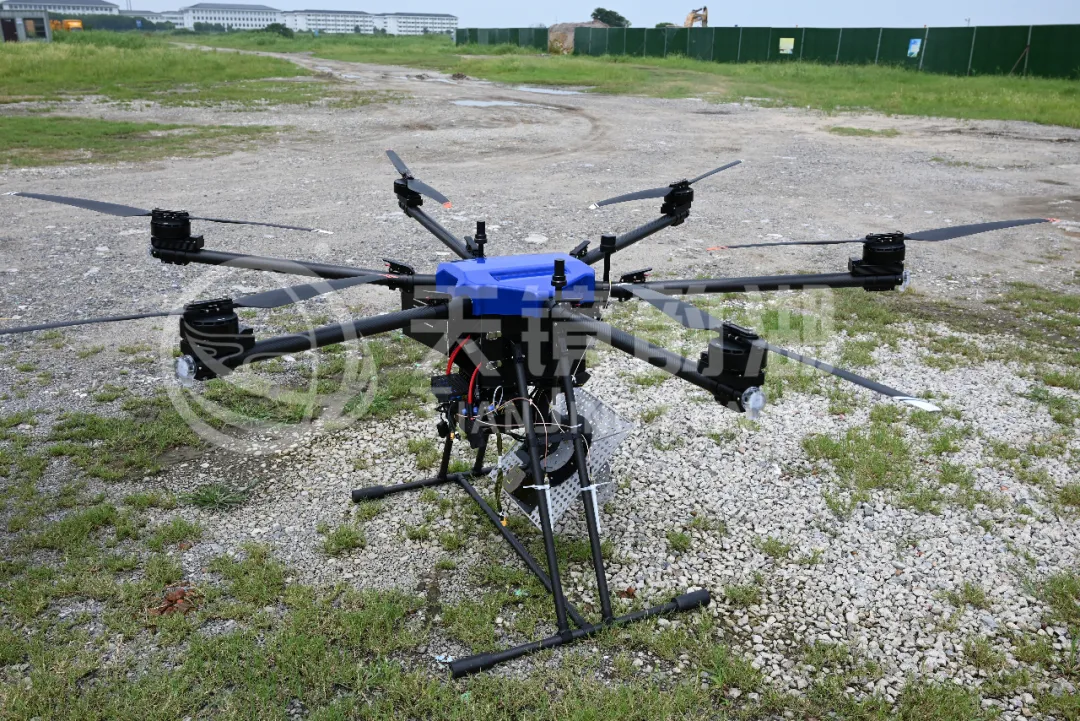
Multirotor airborne SAR system
In field operations, this solution lets you mount the system as soon as you land and get imagery as soon as you take off. Once a sortie is complete, you remove the radar, swap in another gimbal payload and keep working, so a single M400 platform can carry out a wide range of missions. For scenarios that call for weekly revisits, such as slope deformation, power line inspection, topographic mapping and reservoir-bank patrols, the quick-release structure and unified timing not only make repeat flights simpler but also make multi-epoch data easier to align. Half of an airborne SAR system's field capability depends on the radar itself; the other half depends on the stability of the platform integration. This M400-oriented quick-release integrated solution turns the hard engineering problems of power supply, synchronization and data links into a standardized kit, making the workflows above smoother and more repeatable.
Advantages of the quick-release structure
• No tools required, single-operator handling
• Installation time ≤ 10 minutes
• Supports rapid rotation across multiple sorties
• Compatible with DJI M-series and other drone models
• Cuts field manpower and time costs
• Ready to fly on arrival, never missing an operating window
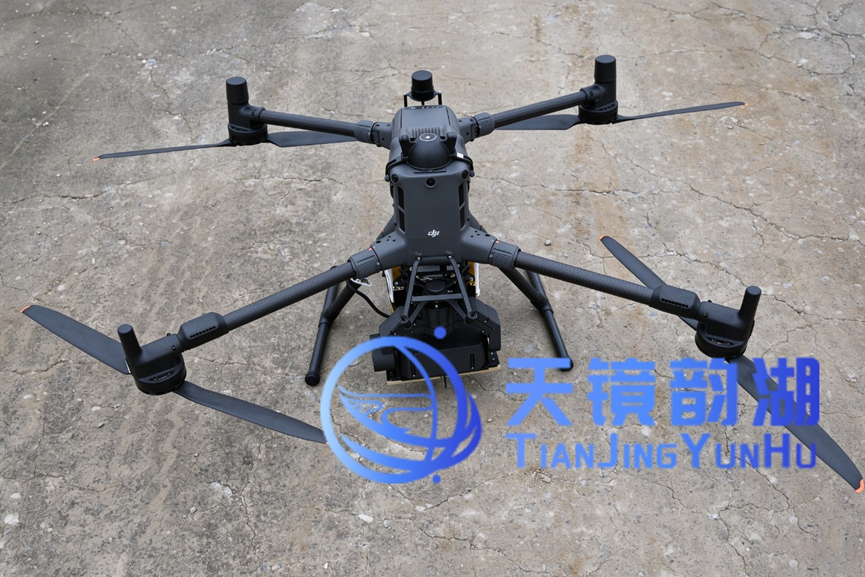
System installation view
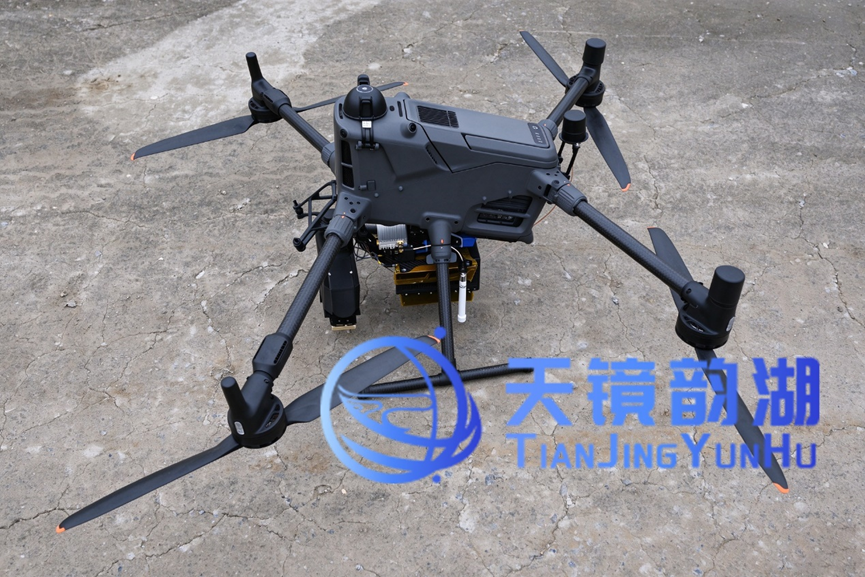
System installation view
The following sections break down how this solution is implemented, across four aspects: payload adaptation, mechanical design, power and data links, and imaging performance.
Payload adaptation. To make the whole system smaller, lighter and more power-efficient, it uses a frequency-modulated continuous wave (FMCW) architecture. Compared with pulsed radars, this brings three benefits. First, low peak transmit power and a low probability of interception, with correspondingly lower equipment complexity. Second, a relatively simple structure and low cost, with fewer components overall. Third, straightforward support for dechirp processing, which lowers the sampling rate and helps generate wideband signals.
Mechanical design. A quick-release adapter is built around the belly position of the M400 gimbal and paired with a custom vibration-damping mount: it stays firmly in place in flight, while a common bus link provides seamless power and data transmission. The payload can be installed and removed without additional tools, so assembly and checks can be completed quickly before a mission, and the imaging attitude stays stable during it, laying the mechanical foundation for integrated power and data links and stable imaging.
Power and data links. Control commands, status feedback and SAR data links are all routed through the native interface, enabling plug-and-play operation and low-latency communication: no firmware changes and no extra wiring, which reduces the compatibility and reliability problems caused by multi-interface adapters in conventional integrations. Link self-checks can be completed quickly before a mission, with real-time monitoring of payload status and data quality. Power status is reported back for monitoring, which supports pre-mission self-checks and in-mission handling of anomalies, improving deployment efficiency while safeguarding continuity of imaging operations.
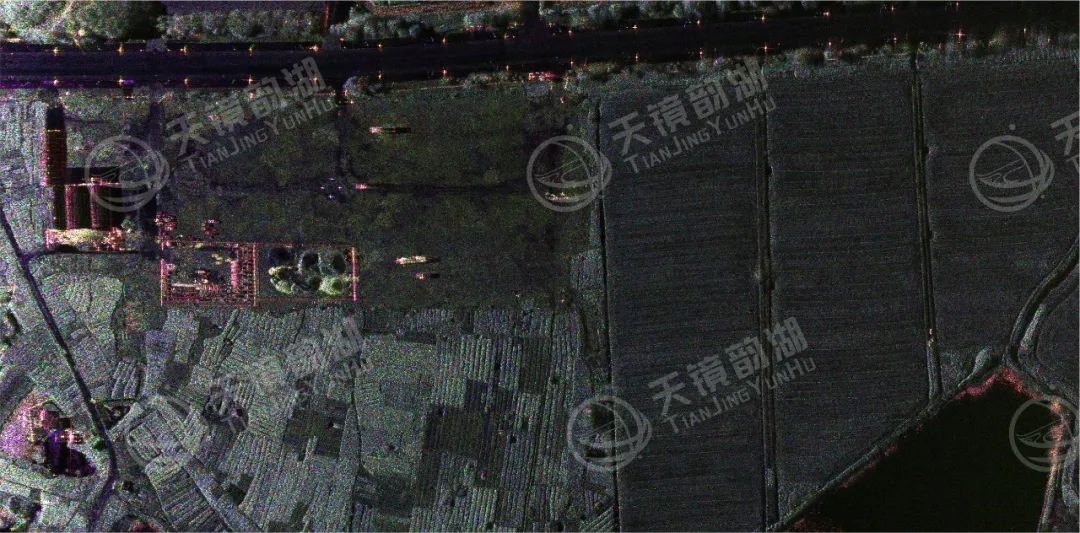
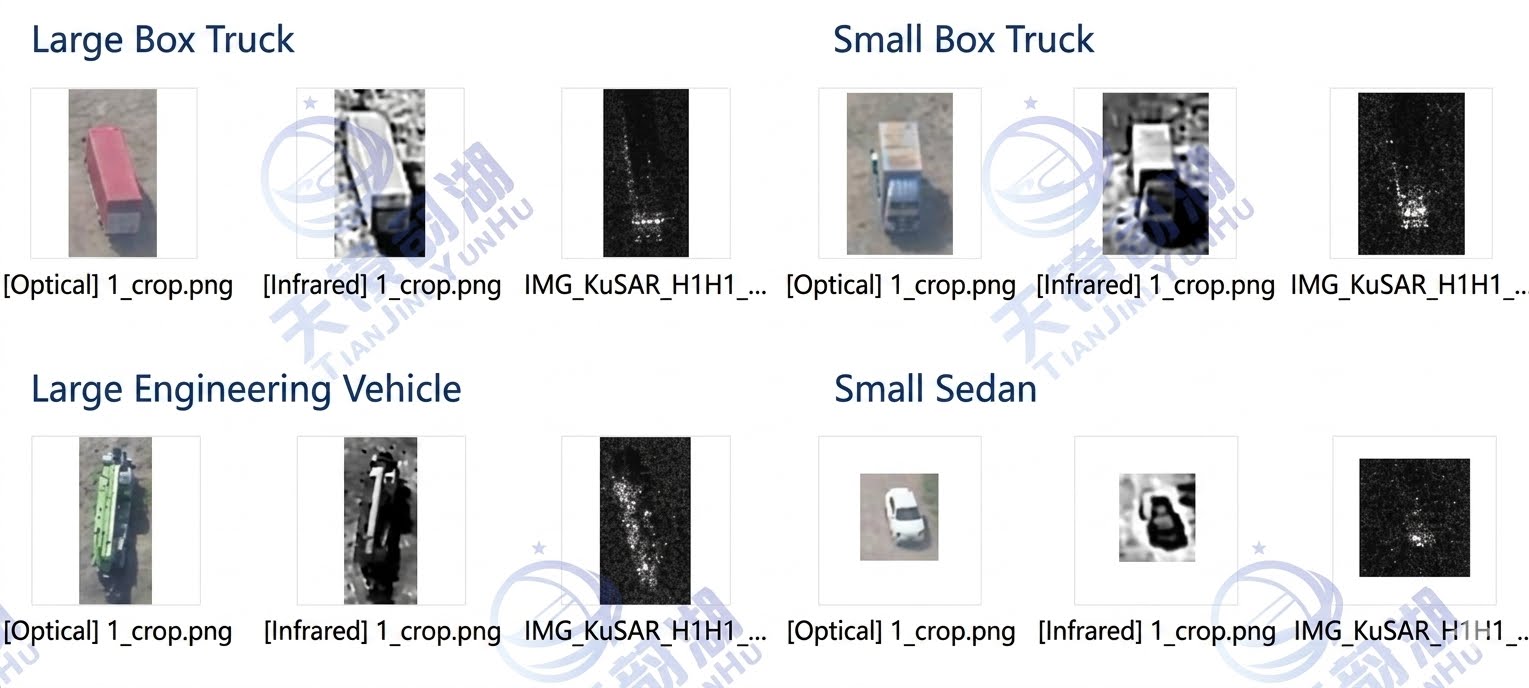
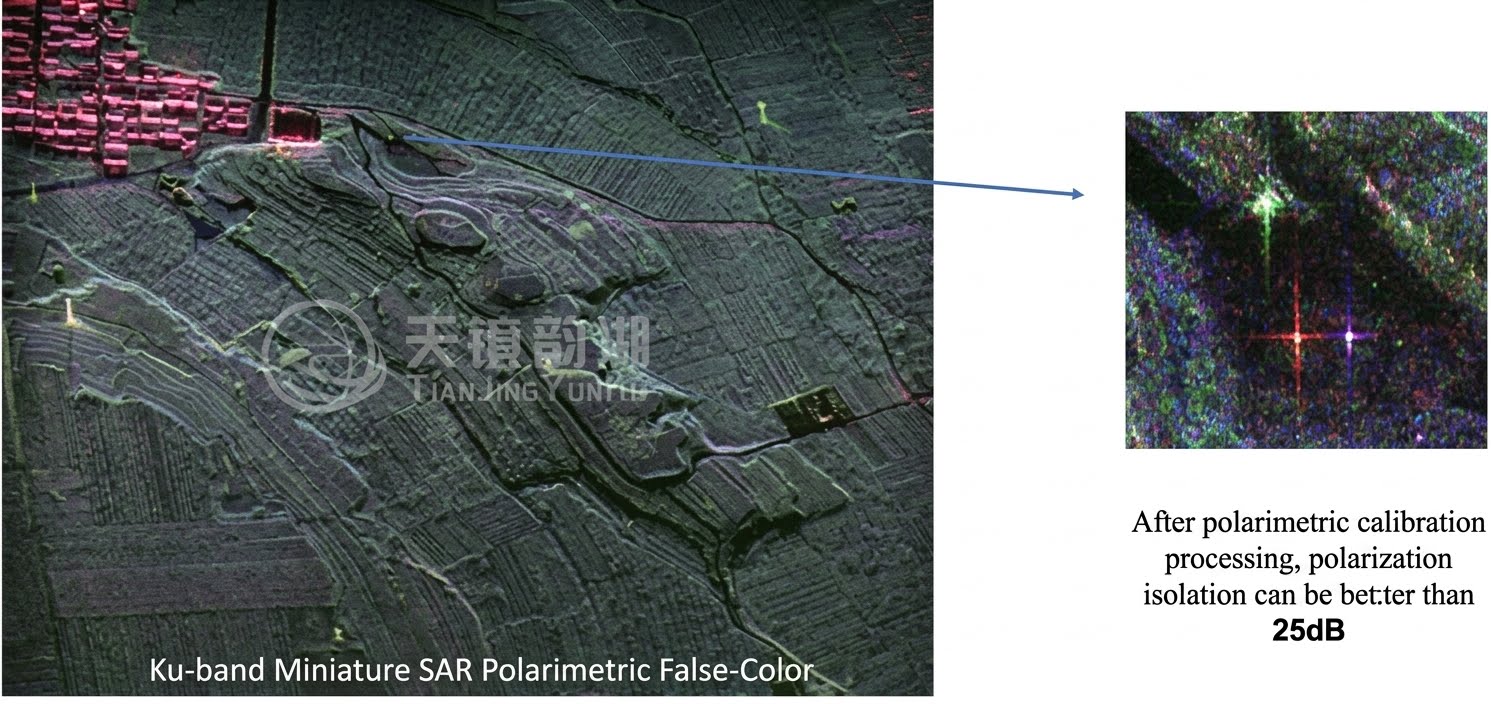
Imaging performance. With quick-release integration and stable attitude control, the payload mounts quickly and integrates firmly, the imaging attitude remains stable throughout the flight, and system image quality and data usability are effectively secured. Post-processed imagery is stable and reliable, with good visibility of weak targets and clear layering of ground features. The solution adapts flexibly to geological hazards, emergency monitoring, routine inspection and many other scenarios, providing dependable remote sensing data support for all kinds of monitoring missions.
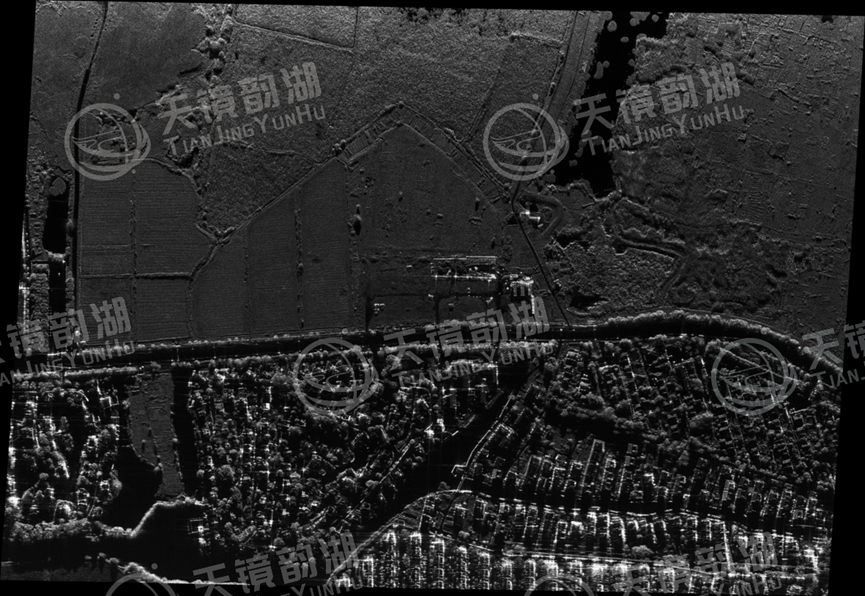
X-band 0.15m resolution image
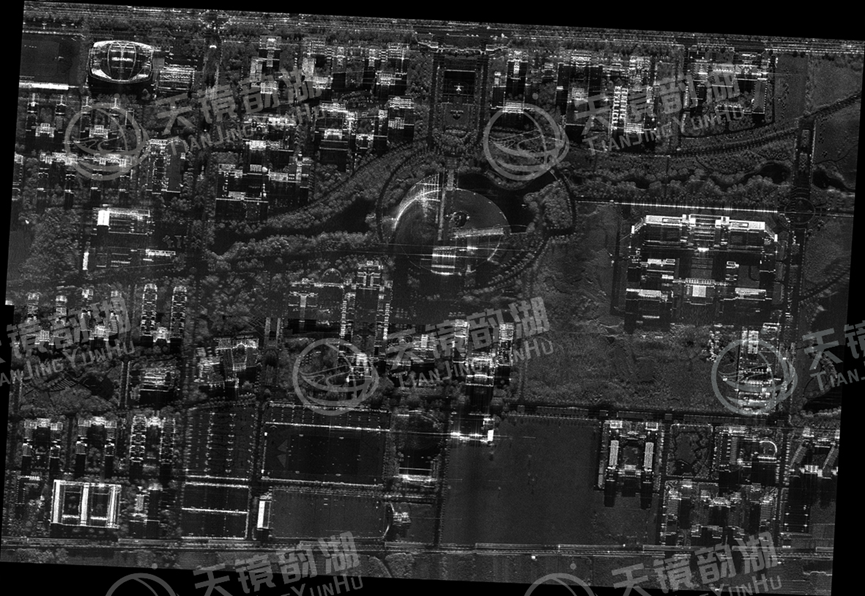
Ku-band 0.15m resolution image
From mounting to imaging, this solution turns what used to rely on experience and manual tuning into a standardized, repeatable process: lighter equipment, fewer connectors, steadier flights and better image quality, so frontline crews can put their energy back into the monitoring itself.