

News and Resources
Company News
 Home
2026.01.13
2025 Tianjing Yunhu: A Brilliant Journey of Technological Empowerment and Continuous Expansion
Tianjing Yunhu: Technology Empowers a Magnificent Chapter, Steadfast Journey Embarks on a New Journey

2025.12.18
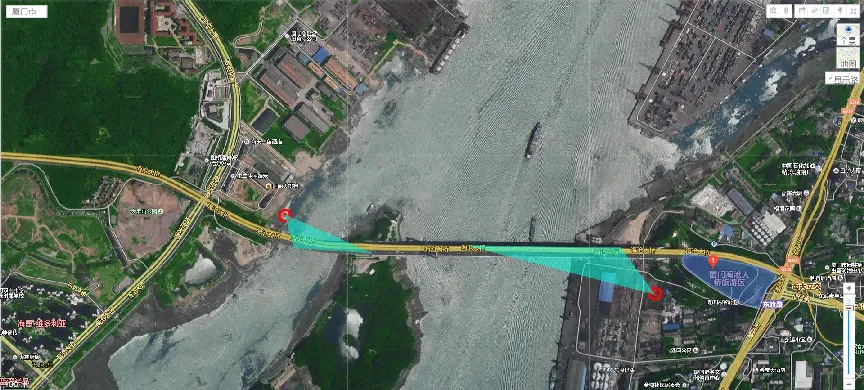
Tianjing Yunhu | Airborne SAR Applications on River Embankments
In a dangerous section of the middle reaches of the Yangtze River, night fell over the surging waters, and continuous torrential rain rendered traditional optical monitoring methods nearly ineffective. At this critical moment, several drones equipped with synthetic aperture radar (SAR) silently took off, piercing the thick rain curtain to perform millimeter-level precision "scans" of the riverbanks stretching dozens of kilometers below. Hours later, a precise deformation analysis report was delivered to the flood control headquarters, clearly identifying two potential seepage points. The emergency response team then deployed precisely, averting a possible dike breach. This is not science fiction, but a revolutionary change brought about by the integration of low-altitude economics and advanced remote sensing technology to the ancient field of riverbank monitoring.
2025.12.02
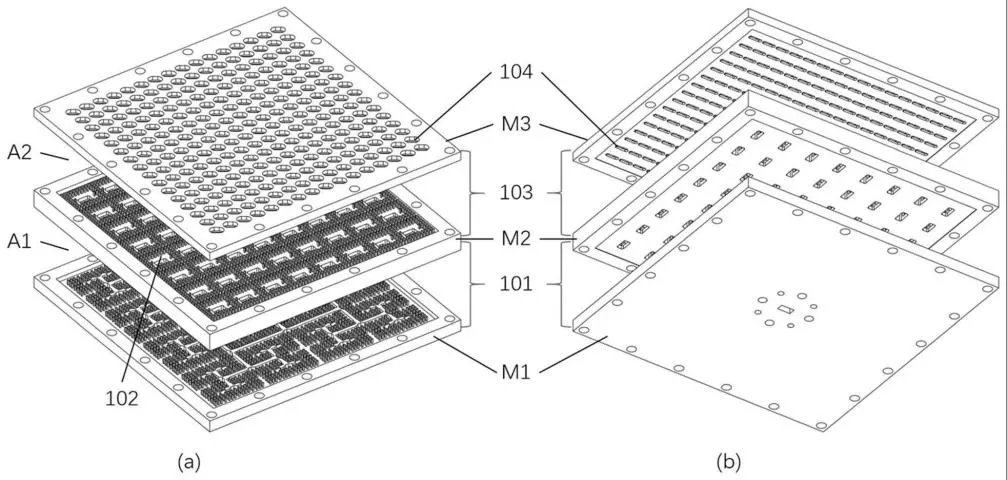
Tianjing Yunhu | Antenna: The "Eyes" of the SAR System
As a crucial energy conversion device, the core function of an antenna is to achieve bidirectional conversion between high-frequency current and electromagnetic waves. During the signal transmission phase, it converts the high-frequency current output by the transmitter into electromagnetic waves that can propagate in free space and radiate them outward. During the signal reception phase, it captures useful electromagnetic waves in free space, restores them to high-frequency current, and transmits them to the receiving device, thus completing the radiation and reception process of radio waves.
2025.11.19
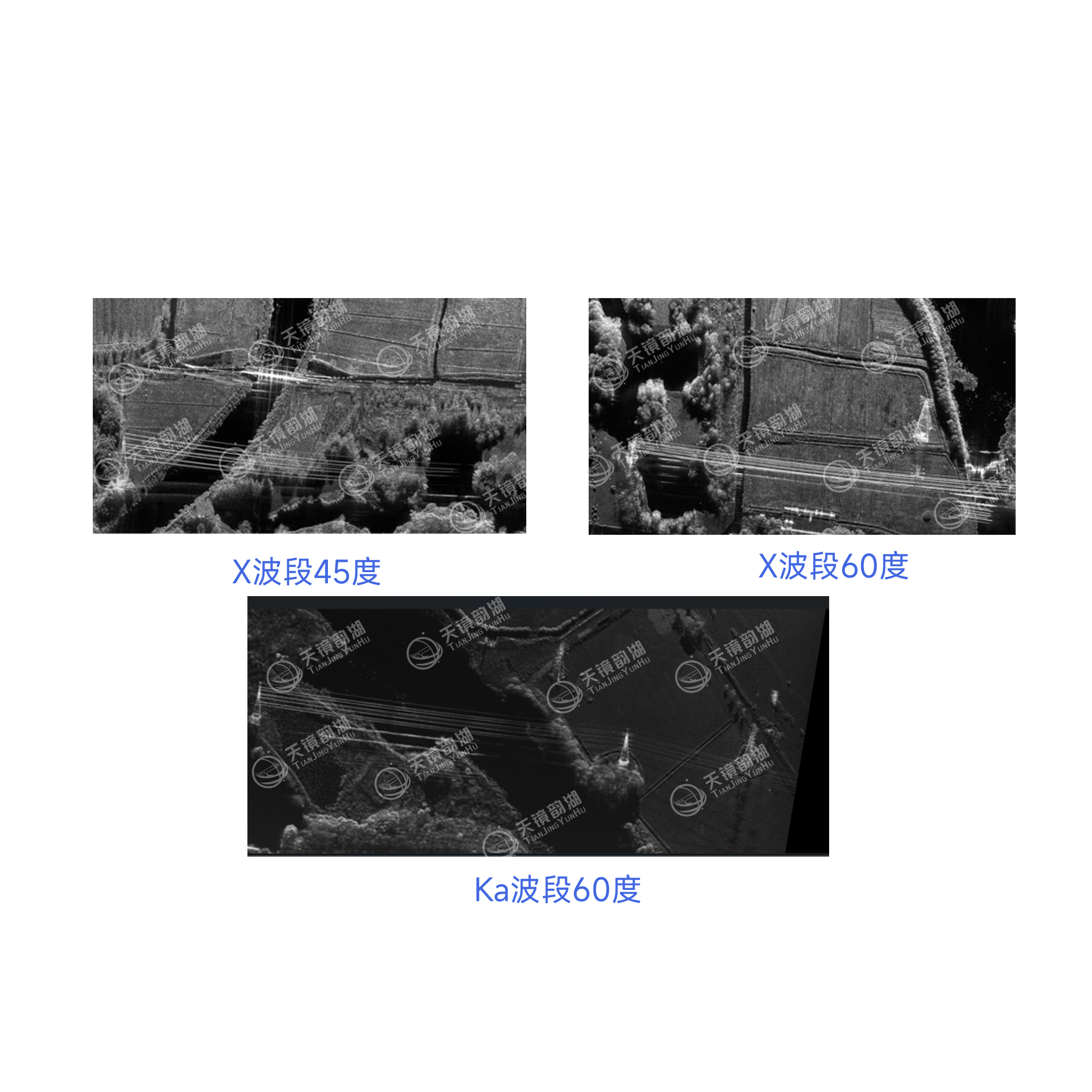
Tianjing Yunhu | Airborne SAR—The "Smart Eye" of the Power Industry
Across the vast land, the crisscrossing power grid is the "energy artery" upon which modern society depends. However, the inspection and maintenance of these power facilities, which span mountains, rivers, and wilderness, have always faced enormous challenges, including complex environments, low efficiency, and high safety risks. Traditional manual inspections and visible light remote sensing methods are often ineffective in adverse weather conditions, at night, or in complex terrain. Now, a cutting-edge technology called airborne SAR is becoming the "smart eye" protecting the safety of the power grid with its unique "seeing-through" capabilities.
2025.11.12
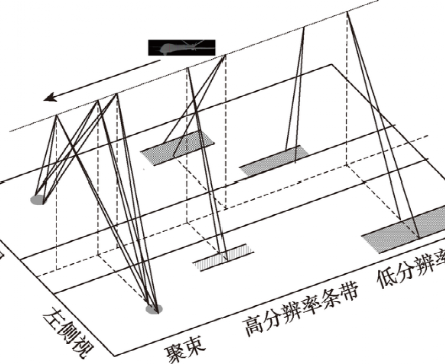
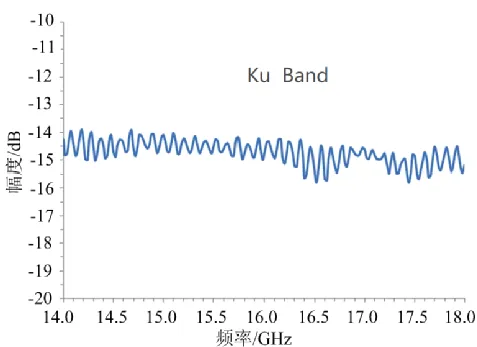
Tianjing Yunhu | Ku-band SAR—Empowering Precise Sensing and High-Resolution Mapping
Synthetic Aperture Radar (SAR) bands are typically defined based on the frequency (or wavelength) of electromagnetic waves, with different bands corresponding to different frequency ranges and application characteristics. The Ku band, as an important member of this family, has a frequency range defined between 12-18 GHz, corresponding to wavelengths of approximately 1.67-2.5 cm. From the perspective of the overall band family, the Ku band occupies a special position within the microwave frequency band. It is lower than the higher-frequency Ka band (26.5-40 GHz) and higher than the relatively lower-frequency X band (8-12 GHz) and C band (4-8 GHz), etc.
2025.11.05
Tianjing Yunhu | SAR radar Ka band—ultra-high resolution weapon
Ka stands for K-above. Ka-band microwave signals belong to the millimeter-wave band, with a frequency range of 26.5-40 GHz, also known as the 30/20 GHz band. It is the "ultra-high precision microscope" or "agile scout" in the SAR family. It is one of the shortest wavelength and highest frequency bands currently used in spaceborne and airborne SAR.